Check How Often to Do Strength Training in Your 40s, on a Weekly Basis
This page contains Coupang Partners affiliate links; the operator may earn a commission.
Key Takeaway
The adult guideline that applies in your 40s is strength training on 2 or more days a week, with 8 to 12 reps per set and at least a day's rest for the same area. Both guidelines cover adults aged 19 to 64.
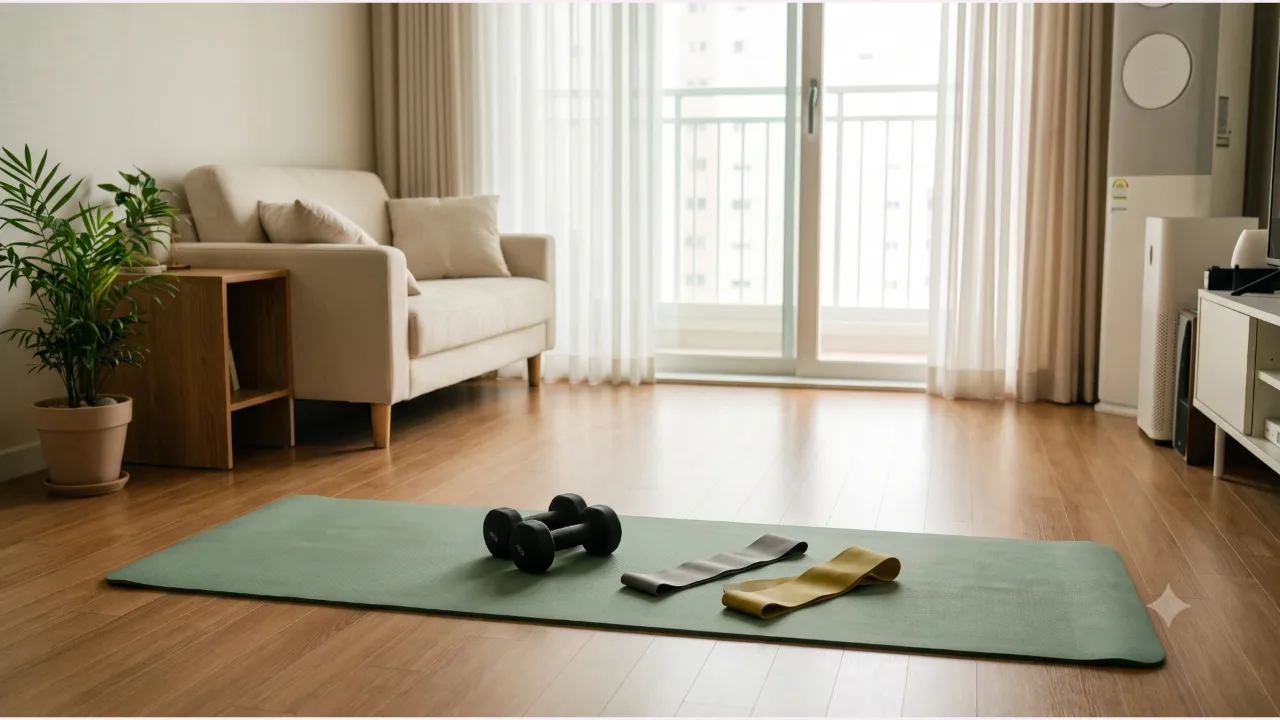
How many days a week are you told to do strength training?
The adult range (ages 19 to 64) on the KDCA National Health Information Portal advises strength training on 2 or more days a week. Its references include the Ministry of Health and Welfare's 2023 physical activity guidelines, and you can find the same recommended amount on page 34 of the ministry's attached PDF.
People in their 40s fall in this adult range. Things needed for people 65 and over, such as separate balance exercises, aren't covered in this post, so read according to your own age range.
How is each session supposed to go?
The same guidance sums up the method in three points.
- Include every area you train evenly, without leaving any out.
- Do 8 to 12 reps per set.
- At least one day of rest is recommended before training the same area again.
Read reps and sets separately. 8 to 12 is the number of repetitions within one set, and the number of sets is how many such groups you do. The source also explains that once the exercise gets easier, you increase the weight or the number of sets (2 to 3 sets). Don't read that as an instruction that everyone should do the same number of sets from the start. For a personal plan, get advice based on your exercise experience and physical condition.
The rest rule means you need a plan that doesn't train the same area on two days in a row. Picking two days that are spaced apart, such as Monday and Thursday, makes it easy to build a plan that fits the guidance. This day layout is only an example of applying the guidance, not a fixed schedule.
How do you combine it with cardio?
In the KDCA National Health Information Portal's 2026 adult guidance, the cardio recommendation can be met by choosing either moderate or vigorous intensity, or by mixing the two. It doesn't mean you must fill both cardio rows below in full. Check the strength training recommendation separately alongside it.
| Type | Recommendation | Note |
|---|---|---|
| Moderate-intensity cardio | 150 to 300 minutes a week | Separate from strength training |
| Vigorous-intensity cardio | 75 to 150 minutes a week | Separate from strength training |
| Strength training | 2 or more days a week | 8 to 12 reps per set |
| Sitting time | Minimize as much as possible | Applies every day |
Cardio minutes and strength days are separate things to check. Not all your walking time counts as moderate-intensity time. The talk test on page 8 of the ministry's guideline defines moderate intensity as a level where you can talk but would find it hard to sing. Don't add a leisurely stroll straight into the minutes above.
Why look at sitting time too?
The KDCA National Health Information Portal advises minimizing the time you sit during the day as much as possible. Even on a day you exercised, if you spend long hours sitting, this item is not being met. For office workers, building breaks from long sitting into the workday fits the guidance.
How could you lay out a week?
Let's work out the recommended amount with a hypothetical schedule. 30 minutes × 5 days = 150 minutes, and 60 minutes × 5 days = 300 minutes. This assumes the cardio time was done at moderate intensity, and it is not a real person's exercise log. The table below is an example that places 150 of those minutes. You can change the days, and it does not replace an exercise plan a doctor has set for you personally.
| Day | Example |
|---|---|
| Mon | Strength training (legs, back, chest, shoulders, arms, abs) |
| Tue | 30 minutes of walking at moderate intensity |
| Wed | 30 minutes of walking at moderate intensity |
| Thu | Strength training (legs, back, chest, shoulders, arms, abs) |
| Fri | 30 minutes of walking at moderate intensity |
| Sat | 30 minutes of walking at moderate intensity |
| Sun | 30 minutes of walking at moderate intensity |
The legs, back, chest, shoulders, arms, and abs in the table are one way to group areas so none gets left out. The guideline does not prescribe exercise using exactly these six names. This applies the source's instruction to include every area to the example, and for specific movements, weights, and the number of sets, get advice that fits your own condition.
When should you contact a medical institution?
If you have chest pain, dizziness, or joint pain, or you are being treated for a condition now, settle the intensity and type of exercise first with the doctor treating you. This post organizes publicly available physical activity guidance and does not replace a personal exercise plan.
Frequently Asked Questions
Can I do strength training every day?
The KDCA National Health Information Portal advises resting at least a day before training the same body area again. A plan that doesn't hit the same area back to back fits the guidance.
Do I need to do cardio as well?
The KDCA National Health Information Portal's adult (ages 19 to 64) guidance recommends 150 to 300 minutes a week of moderate-intensity aerobic activity, or 75 to 150 minutes of vigorous activity, together with strength training.
Is there anything to watch for in the time I'm not exercising?
The KDCA National Health Information Portal advises cutting down the time you spend sitting during the day as much as possible.
Sources & Verification Date
- Physical Activity: Here's What You Need to Know! (KDCA National Health Information Portal) · Verified
- Physical Activity Guidelines for Koreans (2023), Revised Edition (Ministry of Health and Welfare, Health Promotion Division, 2023-12-11) · Verified
All materials have been verified from official announcements and may have changed since verification.