Review Home Strength and Balance Exercise Research for Adults 65 and Older
Key Takeaway
Is walking alone enough when you start exercising at home, or do strength and balance activities matter too?
The US Community Preventive Services Task Force (CPSTF) recommends home-based exercise programs to improve physical fitness among independently living adults aged 65 and older. The recommendation dates to 2022, and a July 2026 publication added supporting appendices.
What programs were reviewed?
CPSTF assessed 17 randomized studies included in a systematic review published in 2021. The median age of participants was 73. The studies were about home exercise, but they don't cover every situation in which someone exercises alone with a video.
The programs had specific exercises, initial instruction, limited or periodic supervision and sessions at least twice a week. They targeted strength, balance or both, and sometimes used things already at home, like chairs or towels.
What changes did the studies report?
CPSTF reported small but statistically significant improvements in measures of balance, strength, muscle power and muscular endurance. These are averages across studies, so any one person's result can differ.
Five studies that looked at falls reported fewer falls and fall-related outcomes. That's a pattern across studies, not a promise that home exercise will prevent a given fall. Findings on quality of life and time spent in aerobic activity varied from study to study.
How do walking and strength activities fit together?
The US Centers for Disease Control and Prevention (CDC) guidance for adults 65 and older covers three kinds of activity: aerobic, muscle strengthening and balance. The targets are 150 minutes of moderate-intensity aerobic activity a week, plus muscle strengthening at least two days a week. Balance work is recommended too, but this overview doesn't give one frequency for everyone.
| Type | CDC guidance | What to consider |
|---|---|---|
| Aerobic activity | 150 minutes of moderate-intensity activity or 75 minutes of vigorous-intensity activity per week | Brisk walking is one example |
| Muscle strengthening | At least two days a week | Activities should work major muscle groups |
| Balance | Include each week | Standing up from a chair is one example |
If it's hard to meet the full recommendations, the CDC advises being as active as your abilities and conditions allow. So think about your current health before you aim for any target.
What should you prepare at home?
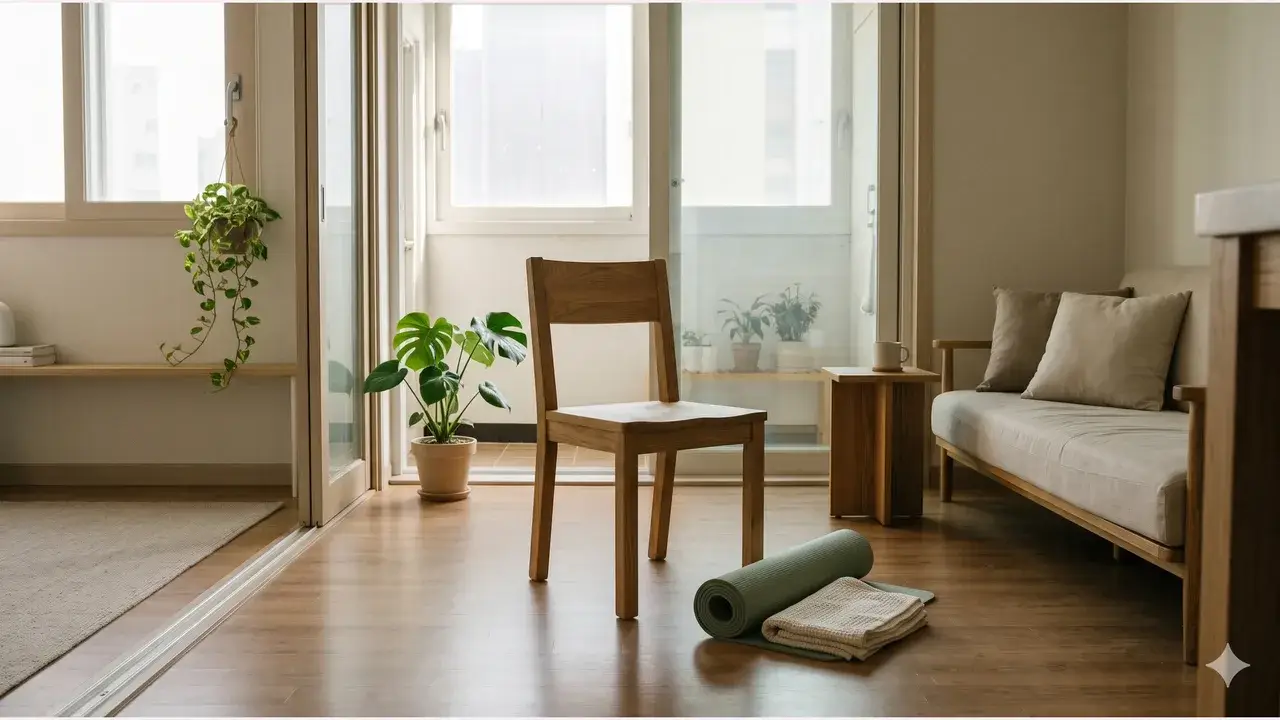
The reviewed programs used items such as chairs and towels. The review doesn't show that you need to buy a particular product to benefit. Clear obstacles from the space and pick a stable spot.
Having trouble learning a movement or picking the right difficulty? Ask a clinician or exercise professional what fits your situation. The reviewed programs began with instruction, then offered limited or periodic supervision afterward.
When should you talk to a clinician?
If you have a chronic condition or a history of falls, or you get pain or dizziness during activity, talk to a clinician before you start a new exercise or turn up its intensity. If symptoms show up mid-exercise, stop, and get care if you need it.
Sources checked November 2, 2026. These findings come mainly from studies of independently living adults aged 65 and older. Don't assume they apply unchanged to people aged 40–64 or to every health condition. See the CPSTF home exercise recommendation, publication updated in 2026 and CDC guidance for older adults.
Frequently Asked Questions
Does home exercise prevent falls?
Some studies reported fewer falls or related outcomes, but prevention for an individual is not guaranteed.
Who was studied?
The recommendation summarizes studies mainly involving independently living adults aged 65 and older.
What should you check before starting?
If you have a chronic condition or a history of falls, discuss suitable activity with a clinician.