Check Fasting Glucose and HbA1c on Your Checkup Results
This page contains Coupang Partners affiliate links; the operator may earn a commission.
Key Takeaway
A fasting glucose of 100 to 125 mg/dL and an HbA1c of 5.7 to 6.4% fall in the prediabetes range, per the KDCA's 2026 material. Check whether you fasted and which test it was, then leave the diagnosis to your doctor.
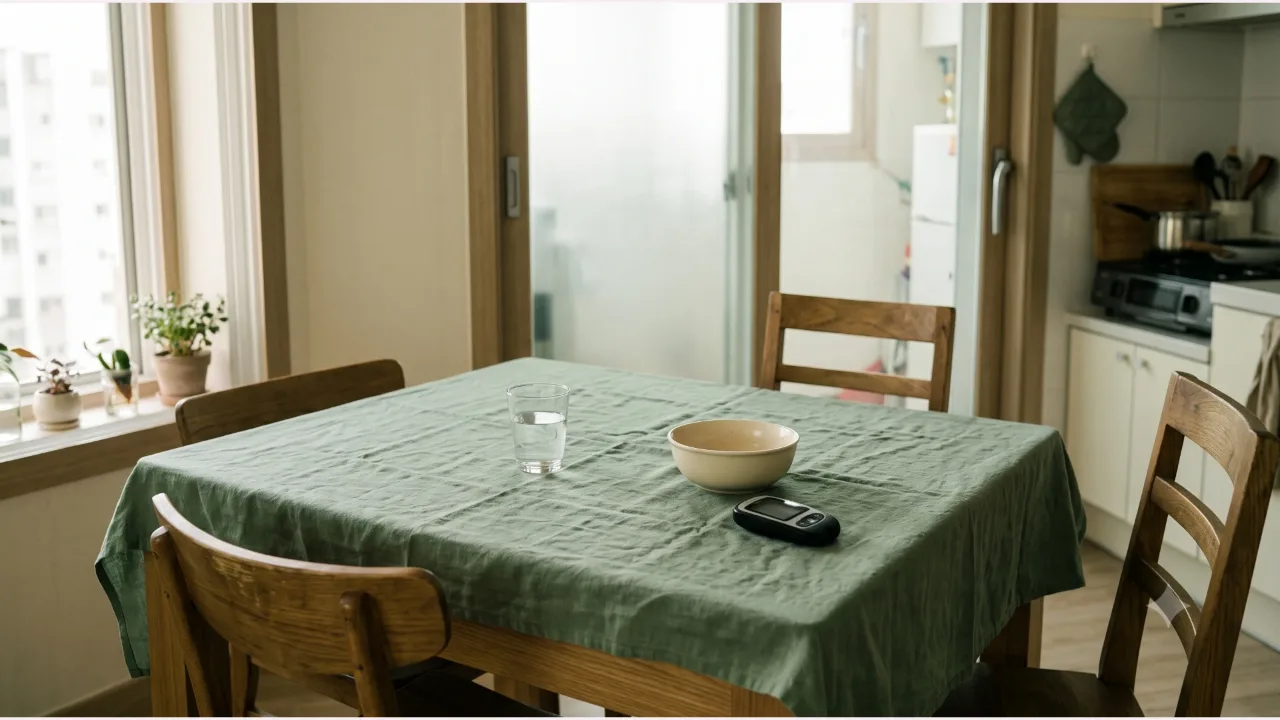
How is fasting glucose checked in a health checkup?
Fasting glucose is part of the common blood tests in the National Health Insurance Service's general health checkup. The Service advises fasting after 9 p.m. the night before and avoiding food and drink on the day. It asks for at least 8 hours of fasting even for afternoon tests.
The KDCA's fasting standard is also 8 hours or more. If you were tested after eating, you can't apply the fasting glucose table below directly, so check the test conditions on your results first.
How are fasting glucose levels classified?
Here is the KDCA National Health Information Portal's explanation in table form.
| Fasting glucose | Category |
|---|---|
| Below 100 mg/dL | Normal |
| 100 to 125 mg/dL | Prediabetes (high-risk group) |
| 126 mg/dL or higher | One of the diagnostic criteria for diabetes |
If you're near a borderline value, it's safer to take your results to a medical institution and talk it over than to wait until your next checkup.
What does HbA1c show?
According to the KDCA National Health Information Portal, HbA1c is a test that reflects your average blood sugar over the past 2 to 3 months. It can be measured even when you are not fasting. Unlike fasting glucose, it shows the trend of the past few months, not a day or two of meals.
| HbA1c | Category |
|---|---|
| Below 5.7% | Below the prediabetes range |
| 5.7 to 6.4% | Prediabetes |
| 6.5% or higher | One of the diagnostic criteria for diabetes |
What criteria are used to diagnose diabetes?
The KDCA's 2026 material lists the four below as separate diagnostic criteria. Read HbA1c in %, and read plasma glucose for the other three in mg/dL. This is not a table for diagnosing from a single reading on a home device.
| Test or situation | Diagnostic criterion (glucose unit: mg/dL) |
|---|---|
| HbA1c test | 6.5% or higher |
| Fasting test (8 hours or more), plasma | 126 or higher |
| Oral glucose tolerance test (75 g), plasma 2 hours after the load | 200 or higher |
| Random plasma test with classic symptoms such as excessive urination, excessive thirst, or unexplained weight loss | 200 or higher |
The first three test criteria are, in principle, confirmed by repeat testing on another day. The material also notes an exception: diagnosis can be made if two or more are met on the same day. The random-test criterion with symptoms is kept separate, and your doctor decides which criterion applies.
The 140 to 199 mg/dL range for impaired glucose tolerance is the plasma value checked 2 hours after an oral load test using 75 g of glucose. A value taken after a meal varies with the food, so this range alone doesn't confirm impaired glucose tolerance.
What else should you look at on your results besides the numbers?
There are three things that are easy to miss if you look only at the numbers. The first is units. Fasting glucose is written in mg/dL and HbA1c in %, so don't compare them with each other. The second is test conditions. Whether you kept to at least 8 hours of fasting is the premise for interpreting fasting glucose. The third is your earlier checkup results. Comparing whether this value is in the same range or has moved toward prediabetes makes it easier to talk with your doctor.
The KDCA National Health Information Portal uses prediabetes to mean the range between normal and diabetes. The term prediabetes is not itself a diagnosis. Decide with your doctor whether to retest and manage things within that range.
When should you contact a medical institution?
If the values on your results are in the prediabetes or diagnostic range, decide with your doctor whether to retest and how to change your daily habits. If you are very thirsty, urinate often, or are losing weight for no reason, see a doctor without waiting for your next checkup. This post organizes publicly available diagnostic criteria and does not replace an individual diagnosis.
Frequently Asked Questions
If my fasting glucose is 126 or higher, do I have diabetes right away?
The criterion for plasma glucose tested after fasting at least 8 hours is 126 mg/dL or higher. The KDCA's 2026 guidance explains that diagnosis is generally confirmed by retesting on another day, though it can be made if two criteria are met on the same day. Your doctor decides whether that applies.
Do I need to fast for the HbA1c test?
The KDCA National Health Information Portal says HbA1c reflects your average blood sugar over the past 2 to 3 months and can be measured even when you are not fasting.
What numbers count as prediabetes?
The KDCA National Health Information Portal gives an HbA1c of 5.7 to 6.4% and a fasting glucose of 100 to 125 mg/dL as the prediabetes range.
Sources & Verification Date
- Diabetes (KDCA National Health Information Portal) · Verified
- General Health Checkup (National Health Insurance Service, Health Checkup Guide) · Verified
All materials have been verified from official announcements and may have changed since verification.